TL;DR
- Stopping measurement when results drop means you can only see symptoms, not where the problem is actually happening.
- Businesses that measure consistently, in good months and bad, develop a funnel picture that others never get.
- Three gaps appear in almost every established business: tracking activity not outcomes, data siloed across platforms, and no measurement plan.
- The Dedicated Measurement Management service handles the full stack: audit, plan, analytics setup, dashboards, and ongoing management.
During the Canada Sprint Race, Isack Hadjar lost a lap to an engine issue and dropped to last. Red Bull sent him back out, not to race but to collect data for qualifying and Sunday’s Grand Prix. His race was over. His usefulness to the team wasn’t.
Most business owners go the other direction. When the numbers drop, they stop looking.
Why stopping measurement costs the most
When results are good, owners watch everything. When leads slow down, cost-per-lead climbs, or conversion rate drops, they get busy trying to fix things and stop tracking whether the fixes are working.
Without data during a downturn, you can’t diagnose. You have symptoms — fewer sales, worse numbers — but nothing that shows you where the problem is happening. Is it traffic quality? The landing page? The offer? The follow-up sequence? Without measurement, you don’t know. You change things and hope, which costs money without telling you anything about what actually moved.
What consistent measurement gives you
When you have a proper measurement system in place and results go sideways, you can see exactly where performance changed. You can isolate the variable and make a targeted fix instead of overhauling everything at once.
Beyond that: you build a baseline that makes every future decision sharper.
Businesses that measure consistently, in good months and bad, develop a picture of their funnel that others never get. They know their cost per qualified lead. They know which traffic sources convert versus which ones inflate session counts without generating anything. They know where prospects drop off and what it costs to bring them back.
Twelve months of clean data gives you a picture that twelve months of hunches never could.
Three gaps in almost every established business
They track activity, not outcomes. Sessions, clicks, impressions: easy to pull, largely meaningless without connecting them to revenue. A measurement system built around business outcomes tells you something useful. One built around traffic metrics mostly makes you feel like something is happening.
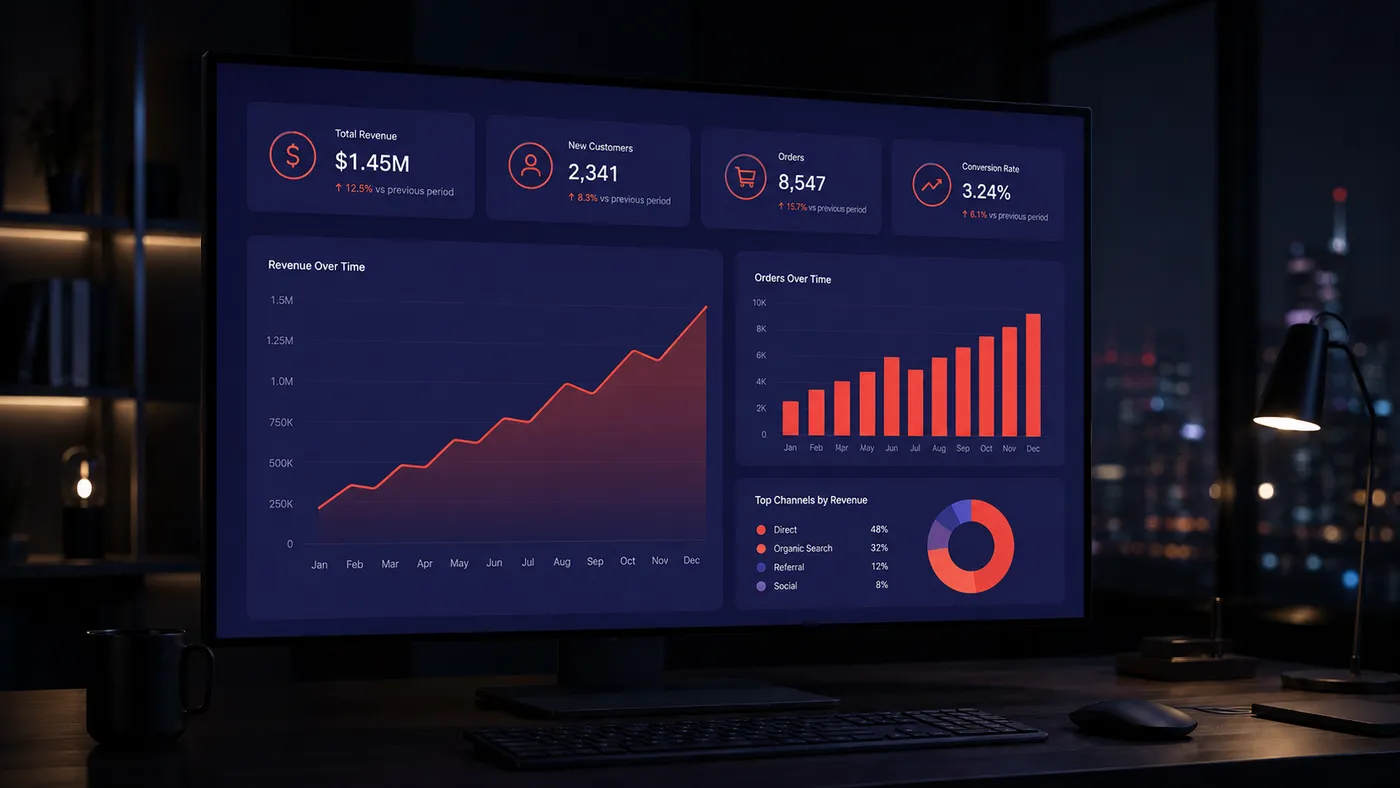
They have data but no dashboard. Information spread across Google Analytics, a CRM, ad accounts, and an email tool isn’t usable. A properly built dashboard pulls it together and answers your actual questions in one place.
They have no measurement plan. A measurement plan defines what questions you need answered, what data answers those questions, and what actions you’ll take based on the answers. Without one, you collect data with no clear purpose. You’re not really using it.
What a proper measurement system looks like
Four components work together.
A measurement audit that shows where you are and what’s missing. A measurement plan that defines what you’re measuring and why. A properly configured analytics stack: GA4, Google Tag Manager, and Looker Studio, set up correctly and verified. Customized dashboards that answer your specific business questions, not generic reports someone has to interpret for you.
Once it’s in place, the work is keeping it current: clean data, updated dashboards as the business evolves, and insights driving actual decisions.
What the Dedicated Measurement Management service does
The DMM service is built for established business owners — two or more years in, consistent traffic and leads, a real marketing budget — who don’t have the time or internal capacity to build and manage a proper measurement system.
We handle the full stack: the initial audit and planning, the analytics setup, the dashboard build, and ongoing management month after month. Your data stays clean, your dashboards stay current, and you always know what’s working.
You don’t hand off a project and get left with a manual. We stay on it while you run your business.
We work with businesses doing $300k or more per year. The discovery call is where we figure out fit: your goals, your current setup, and what good measurement would actually look like for you. No pricing, no pitch — just an honest conversation to see if working together makes sense.
The businesses that come out ahead
Hadjar’s team didn’t park the car when his race was decided. The season still had races left. Every data point made them better prepared for the next one.
A tough quarter is the highest-value time to be measuring, because it’s the only time you can see exactly where performance broke down. The businesses that come out ahead are the ones that kept watching, even when the numbers weren’t what they wanted.
If you’re ready to build a measurement system that actually works, let’s talk.
Frequently Asked Questions
What is a measurement plan?
A measurement plan defines the questions you need answered, the data that answers them, and the actions you'll take based on what you find. Without one, you collect data with no clear purpose. The plan is what turns a dashboard from a report into a decision tool.
What's the difference between tracking activity and tracking outcomes?
Activity metrics — sessions, clicks, impressions — are easy to pull but don't connect to revenue. Outcome metrics — cost per qualified lead, conversion rate by traffic source, revenue per customer segment — tell you whether your marketing is working. Most businesses track activity because it's available by default. Outcome metrics require deliberate setup.
What does Dedicated Measurement Management include?
The DMM service covers four components: a measurement audit of your current setup, a measurement plan defining what you're measuring and why, a properly configured analytics stack (GA4, Google Tag Manager, and Looker Studio), and customized dashboards that answer your specific business questions. Ongoing management keeps data clean and dashboards current as the business evolves.
Who is the Dedicated Measurement Management service for?
The DMM service is for established businesses — two or more years operating, consistent traffic and leads, a real marketing budget — that don't have the internal capacity to build and manage a proper measurement system. New Reality Agency works with businesses doing $300k or more per year.
